CARBONATION DEPTH MEASUREMENT TEST

    Carbonation of concrete occurs when the carbon dioxide, in the atmosphere in the presence of moisture, reacts with hydrated cement minerals to produce carbonates, e.g. calcium carbonate. The carbonation process is also called depassivation. Carbonation penetrates below the exposed surface of concrete extremely slowly. The time required for carbonation can be estimated knowing the concrete grade and using the following equation:
                                                        t=(d/k)2
where,
    t is the time for carbonation,
    d is the concrete cover,
    k is the permeability

Typical permeability values are shown in Table 1. Permiability Values for Various Concrete Grade

      The significance of carbonation is that the usual protection of the reinforcing steel generally present in concrete due to the alkaline conditions caused by hydrated cement paste is neutralized by carbonation. Thus, if the entire concrete cover over the reinforcing steel is carbonated, corrosion of the steel would occur if moisture and oxygen could reach the steel.
EQUIPMENTS
    If there is a need to physically measure the extent of carbonation it can be determined easily by spraying a freshly exposed surface of the concrete with a 1% phenolphthalein solution. The calcium hydroxide is coloured pink while the carbonated portion is uncoloured.

PROCEDURE
     The 1% phenolthalein solution is made by dissolving 1gm of phenolthalein in 90 cc of ethanol. The solution is then made up to 100 cc by adding distilled water. On freshly extracted cores the core is sprayed with phenolphthalein solution, the depth of the uncoloured layer (the carbonated layer) from the external surface is measured to the nearest mm at 4 or 8 positions, and the average taken. If the test is to be done in a drilled hole, the dust is first removed from the hole using an air brush and again the depth of the uncoloured layer measured at 4 or 8 positions and the average taken. If the concrete still retains its alkaline characteristic the colour of the concrete will change to purple. If carbonation has taken place the pH will have changed to 7 (i.e. neutral condition) and there will be no colour change.
      Another formula, which can be used to estimate the depth of carbonation, utilizes the age of the building, the water-to-cement ratio and a constant, which varies depending on the surface coating on the concrete.

                                      y=7.2XC2/(R2(4.6x-1.76)2)
where,
   y is age of building in years,
   x is water-to-cement ratio,
   C is carbonation depth,
   R is a constant (R= αβ).

R varies depending on the surface coating on the concrete (β) and whether the concrete has been in external or internal service (α). This formula is contained in the Japanese Construction Ministry publication “Engineering for improving the durability of reinforced concrete structures.” α is 1.7 for indoor concrete and 1.0 for outdoor concrete. β values are shown in Table 2.
 Carbonation Depth Measurement Test
RANGE AND LIMITATIONS
       The phenolphthalein test is a simple and cheap method of determining the depth of carbonation in concrete and provides information on the risk of reinforcement corrosion taking place. The only limitation is the minor amount of damage done to the concrete surface by drilling or coring.

Modified Slump Test

     The modified slump test (Ferraris and de Larrard 1998; Ferraris 1999; Ferraris and Brower 2001) is intended for use as a field test to measure both the plastic viscosity and yield stress of concrete mixtures. The test adds the parameter of time to the standard slump test in order to measure plastic viscosity.
      The apparatus for the modified slump test consists of a vertical rod that extends from a horizontal base plate through the center of the standard slump cone. The slump cone is filled in accordance with ASTM C143 and a sliding disk is placed atop the fresh concrete. Once the slump cone is removed, the time for the disk to slide a distance of 100 mm is measured. The sliding disk comes to rest on a stop located on the vertical rod. After the disk comes to rest, the concrete continues to subside to its final position. The final slump measurement is recorded no later than 60 seconds after the slump cone is removed. A schematic of the test procedure is shown in Figure below.

Modified Slump Test

      The rheological parameters of yield stress and plastic viscosity can be expressed in fundamental units using equations based on the results of the test. The yield stress (  τ0 , Pa) is expressed in terms of final slump (s, mm) and concrete density ( ρ , kg/m3); while the plastic viscosity (μ ,Pa.s) is a function of final slump, slump time (T, sec), and concrete density. The proposed expression for yield stress is given below:

                                            τ0=ρ/347(300-s)+212

The equation for plastic viscosity is based on a semi-empirical model developed by using the results of the modified slump test, as shown in Equation [1]:

     For 200 mm < s < 260 mm: μ = ρT .1.08 .10−3 (s −175)
     For s < 200 mm: μ = 25 .10−3ρT                                                            [1]

      Nomographs have been developed based on the above equations to allow quick determination of yield stress and plastic viscosity in the field. Due to the need to measure the time for a slump of 100 mm to be achieved, the test only applies to concrete with slumps ranging from 120 to 260 mm. It has been shown that the rod has a negligible effect on the final slump and that there is no risk of the concrete falling faster than the plate. Other researchers have eliminated the sliding plate and shortened the rod so that it terminates 100 mm below the top of the slump cone (Ferraris 1999). There is a possibility of operator error in determining the precise instances to start and stop the measurement of the slump time.
       Additional experimental testing needs to be carried out on a wider range of concrete mixtures in order to verify the validity of the test. Ferraris and Brower (2001) found poor correlation between the results of the modified slump test and plastic viscosity measured with five rotational rheometers.
Advantages:
• The test is simple to conduct and only requires slightly more equipment than the slump test.
• The test gives an indication of both yield stress and plastic viscosity.
Disadvantages:
• The test is not a dynamic test and does not account for the thixotropy of concrete or the ability of concrete to flow under vibration.
• Further testing is required to verify the validity of the test.

J-Ring Test

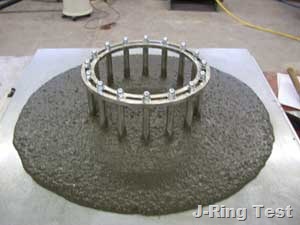
       The J-ring test (EFNARC 2002; Bartos, Sonebi, and Tamimi 2002) extends common filling ability test methods to also characterize passing ability.
       The J-ring test device can be used with the slump flow test, the orimet test, or the V-funnel test. The J-ring, as shown in Figure 25, is a rectangular section (30 mm by 25 mm) open steel ring with a 300 mm diameter. Vertical holes drilled in the ring allow standard reinforcing bars to be attached to the ring. Each reinforcing bar is 100 mm long. The spacing of the bars is adjustable,
although 3 times the maximum aggregate size is typically recommended. For fiber-reinforced concrete, the bars should be placed 1 to 3 times the maximum fiber length.
J-Ring Test
     To conduct the J-ring test in conjunction with the slump flow test, the slump cone is placed in the center of the J-ring and filled with concrete. The slump cone is lifted and concrete is allowed to spread horizontally through the gaps between the bars. Alternatively, the orimet device or the Vfunnel can be positioned above center of the J-ring. Instead of measuring just the time for concrete to exit the orimet or the V-funnel, the concrete is also allowed to spread horizontally through the J-ring.
     Various interpretations of the test results have been suggested. The measures of passing ability and filling ability are not independent. To characterize filling ability and passing ability, the horizontal spread of the concrete sample is measured after the concrete passes through the gaps in the bars of the J-ring and comes to rest. Also, the difference in height of the concrete just inside the bars and just outside the bars is measured at four locations. The smaller this difference in heights is, the greater the passing ability of the concrete will be. Alternatively, the horizontal spread with and without the J-ring can be compared as a measure of passing ability.

IBB Rheometer

      The IBB rheometer (Beaupre and Mindness 1994; Ferraris and Brower 2001; Bartos, Sonebi, and Tamimi 2002) is a modification of the Tattersall two-point device. Although the IBB rheometer was originally developed to measure the rheology of wet-mix shotcrete, it has been successfully used on a wide range of concretes, from concretes with a slump of 20 mm to self-compacting
concretes.
       The device consists of a rotating impeller inserted into a fixed cylindrical container. When testing concrete, a fixed container with dimensions 360 mm by 250 mm is used. A smaller container with dimensions 230 mm by 180 mm can be used for mortars. A computer controlled DC motor turns an H-shaped impeller capable of rotating either in a planetary motion or in an axial rotation. For concrete, a 50 mm gap is left between the impeller and the sides and bottom of the container. When the mortar setup is used, a 25 mm gap exists between the impeller and the container. Based on these dimensions, the maximum aggregate size is 25 mm for concrete samples and 12 mm for mortar samples.
         A load cell measures the reaction torque from the impeller while a tachometer measures the impeller’s rotation speed. Like the Tattersall two-point device, the linear relationship between torque and speed is defined by the slope h and the zero speed intercept g, which are related to plastic viscosity and yield stress, respectively. The values of g and h are calculated  automatically by the computer and displayed at the end of the test. However, g is reported in terms of N-m (not the yield stress unit of Pa) and h is given in terms of N-m-s (not the plastic viscosity unit of Pa-s).
          A portable version of the IBB has been developed. The device is based on the same design as the original IBB, just on a smaller scale. The portable IBB is constructed on an aluminum frame and includes wheels for easy transport.
Advantages:
• The device measures yield stress and plastic viscosity.
• The operation of the device is automated.
• The device is applicable to a wide range of concrete workability.
• The device is self-calibrating.
Disadvantages:
• The results for yield stress and plastic viscosity are not given in terms of Pa and Pa-s, respectively.
• The device, in its current form, is too large for field use. The volume of concrete required for the test is larger than for most other rheometers.
• Like the Tattersall two-point device, segregation can occur over the duration of the test, even when the particular concrete mix would not be susceptible to segregation in actual placement conditions.

Angles Flow Box Test

       The Angles flow box test (Scanlon 1994; Wong et al. 2000) attempts to simulate typical concrete construction in order to characterize the ease with which concrete can be placed. The test measures the ability of concrete to flow under vibration and to pass obstructions.
        The device consists of a rectangular box mounted on a vibrating table. Two adjacent vertical partitions are placed in the middle of the box to divide the box in half. The first partition consists of a screen of circular bars that are spaced so that the openings between the bars are the size of the maximum aggregate. The second partition is a solid, removable plate that initially holds concrete on one side of the box prior to the beginning of the test. After concrete has been loaded on one side of the box, the solid partition is removed and the vibrating table is started. The time for the concrete to pass through the screen and form a level surface throughout the box is recorded. The amount of bleeding and segregation that occurs during vibration can be observed visually. 
         Very little data is available on the validity of the test and on interpretation of the test results. The test method would not be appropriate for very low slump mixes. For highly flowable concrete mixtures, vibration may be unnecessary. A similar concept is used to test the workability of selfcompacting concrete.
Advantages:
• The test method represents actual field conditions. It is a dynamic test that subjects  concrete to vibration.
• The ability of concrete to pass obstructions and resist segregation is assessed.
Disadvantages:
• The test is bulky and would probably not be appropriate for field use.
• The test result is likely a function of both yield stress and plastic viscosity, although these  values are not directly recorded.

SCHMIDT REBOUND HAMMER TEST

      The Schmidt rebound hammer is principally a surface hardness tester. It works on the principle that the rebound of an elastic mass depends on the hardness of the surface against which the mass impinges. There is little apparent theoretical relationship between the strength of concrete and the rebound number of the hammer. However, within limits, empirical correlations have been established between strength properties and the rebound number. Further, Kolek has attempted to establish a correlation between the hammer rebound number and the hardness as measured by the Brinell method.

EQUIPMENTS
       The Schmidt rebound hammer is shown in . The hammer weighs about 1.8 kg  and is suitable for use both in a laboratory and in the field. A schematic cutaway view of the rebound hammer is shown in . The main components include the outer body, the plunger, the hammer mass, and the main spring. Other features include a latching mechanism that locks the hammer mass to the plunger rod and a sliding rider to measure the rebound of the hammer mass. The rebound distance is measured on an arbitrary scale marked from 10 to 100. The rebound distance is recorded as a “rebound number” corresponding to the position of the rider on the scale.

Rebound Hammer

PROCEDURE
       The method of using the hammer is explained using Fig. 1. With the hammer pushed hard against the concrete, the body is allowed to move away from the concrete until the latchconnects the hammer mass to the plunger, Fig. 1.a
     The plunger is then held perpendicular to the concrete surface and the body pushed towards the concrete, Fig. 1b. This movement extends the spring holding the mass to the body. When the maximum extension of the spring is reached, the latch releases and the mass is pulled towards the surface by the spring, Fig. 1c.The mass hits the shoulder of the plunger rod and rebounds because the rod is pushed hard against the concrete, Fig. 1d. During rebound the slide indicator travels with the hammer mass and stops at the maximum distance the mass reaches after rebounding. A button on the side of the body is pushed to lock the plunger into the retracted position and the rebound number is read from a scale on the body.

Rebound Hammer Test

APPLICATIONS
       The hammer can be used in the horizontal, vertically overhead or vertically downward positions as well as at any intermediate angle, provided the hammer is perpendicular to the surface under test. The position of the mass relative to the vertical, however, affects the rebound number due to the action of gravity on the mass in the hammer. Thus the rebound number of a floor would be expected to be smaller than that of a soffit and inclined and vertical surfaces would yield intermediate results. Although a high rebound number represents concrete with a higher compressive strength than concrete with a low rebound number, the test is only useful if a correlation can be developed between the rebound number and concrete made with the same coarse aggregate as that being tested. Too much reliance should not be placed on the calibration curve supplied with the hammer since the manufacturer develops this curve using standard cube specimens and the mix used could be very different from the one being tested.

RANGE AND LIMITATIONS

1. Smoothness of the test surface
       Hammer has to be used against a smooth surface, preferably a formed one. Open textured concrete cannot therefore be tested. If the surface is rough, e.g. a trowelled surface, it should be rubbed smooth with a carborundum stone.

2. Size, shape and rigidity of the specimen
       If the concrete does not form part of a large mass any movement caused by the impact of the hammer will result in a reduction in the rebound number. In such cases the member has to be rigidly held or backed up by a heavy mass.

3. Age of the specimen
        For equal strengths, higher rebound numbers are obtained with a 7 day old concrete than with a 28 day old. Therefore, when old concrete is to be tested in a structure a direct correlation is necessary between the rebound numbers and compressive strengths of cores taken from the structure. Rebound testing should not be carried out on low strength concrete at early ages or when the concrete strength is less than 7 MPa since the concrete surface could be damaged by the hammer.

4. Surface and internal moisture conditions of concrete
          The rebound numbers are lower for well-cured air dried specimens than for the same specimens tested after being soaked in water and tested in the saturated surface dried conditions. Therefore, whenever the actual moisture condition of the field concrete or specimen is unknown, the surface should be pre-saturated for several hours before testing. A correlation curve for tests performed on saturated surface dried specimens should then be used to estimate the compressive strength.

5. Type of cement
          High alumina cement can have a compressive strength 100% higher than the strength estimated using a correlation curve based on ordinary Portland cement. Also, super sulphated cement concrete can have strength 50% lower than ordinary Portland cement.

7. Carbonation of the concrete surface
           In older concrete the carbonation depth can be several millimeters thick and, in extreme cases, up to 20 mm thick. In such cases the rebound numbers can be up to 50% higher than those obtained on an un-carbonated concrete surface.

HALF-CELL ELECTRICAL POTENTIAL METHOD

       The method of half-cell potential measurements normally involves measuring the potential of an embedded reinforcing bar relative to a reference half-cell placed on the concrete surface. The half-cell is usually a copper/copper sulphate or silver/silver chloride cell but other combinations are used. The concrete functions as an electrolyte and the risk of corrosion of the reinforcement in the immediate region of the test location may be related empirically to the measured potential difference. In some circumstances, useful measurements can be obtained between two half-cells on the concrete surface. ASTM C876 - 91 gives a Standard Test Method for Half-Cell Potentials of Uncoated Reinforcing Steel in Concrete.

EQUIPMENTS

Half-Cell Electrical Potemtial method Equipments

Half-cell: The cell consists of a rigid tube or container composed of dielectric material that is non-reactive with copper or copper sulphate, a porous wooden or plastic plug that remains wet by capillary action, and a copper rod that is immersed within the tube in a saturated solution of copper sulphate. The solution is prepared using reagent grade copper sulphate dissolved to saturation in a distilled or deionized water.

Electrical junction device: An electrical junction device is used to provide a low
electrical resistance liquid bridge between the surface of the concrete and the half-cell. It consists of a sponge or several sponges pre-wetted with a low electrical resistance contact solution. The sponge can be folded around and attached to the tip of the half-cell so that it provides electrical continuity between the porous plug and the concrete member.

Electrical contact solution: In order to standardize the potential drop through the  concrete portion of the circuit, an electrical contact solution is used to wet the electrical  junction device. One solution, which is used, is a mixture of 95 mL of wetting agent or a  liquid household detergent thoroughly mixed with 19 L of potable water. At temperatures less than 10oC approximately 15% by volume of either isopropyl or denatured alcohol must be added to prevent clouding of the electrical contact solution, since clouding may inhibit penetration of water into the concrete to be tested.

Voltmeter: The voltmeter should be battery operated and have ± 3% end of scale accuracy at the voltage ranges in use. The input impedance should be not less than 10 MW when operated at a full scale of 100 mV. The divisions on the scale used should be such that a potential of 0.02 V or less can be read without interpolation.

Electrical lead wires: The electrical lead wire should be such that its electrical resistance for the length used does not disturb the electrical circuit by more than 0.0001 V. This has been accomplished by using no more than a total of 150 m of at least AWG No. 24 wire. The wire should be suitably coated with direct burial type of insulation.

PROCEDURE
      Measurements are made in either a grid or random pattern. The spacing between measurements is generally chosen such that adjacent readings are less than 150 mV with the minimum spacing so that there is at least 100 mV between readings. An area with greater than150 mV indicates an area of high corrosion activity. A direct electrical connection is made to the reinforcing steel with a compression clamp or by brazing or welding a protruding rod. To get a low electrical resistance connection, the rod should be scraped or brushed before connecting it to the reinforcing bar. It may be necessary to drill into the concrete to expose a reinforcing bar. The bar is connected to the positive terminal of the voltmeter. One end of the lead wire is connected to the half-cell and the other end to the negative terminal of the voltmeter. Under some circumstances the concrete surface has to be pre-wetted with a wetting agent. This is necessary if the half-cell reading fluctuates with time when it is placed in contact with the concrete. If fluctuation occurs either the whole concrete surface is made wet with the wetting agent or only the spots where the half-cell is to be placed. The electrica lhalf-cell potentials are recorded to the nearest 0.01 V correcting for temperature if the temperature is outside the range 22.2 ± 5.5oC.
        Measurements can be presented either with a equipotential contour map which provides a graphical delineation of areas in the member where corrosion activity may be occurring or with a cumulative frequency diagram which provides an indication of the magnitude of affected area of the concrete member.

Equipotential Contour Map: On a suitably scaled plan view of the member the locations of the half-cell potential values are plotted and contours of equal potential drawn through the points of equal or interpolated equal values. The maximum contour interval should be 0.10 V.

Cumulative frequency distribution: The distribution of the measured half-cell
potentials for the concrete member are plotted on normal probability paper by arranging and consecutively numbering all the half-cell potentials in a ranking from least negative potential to greatest negative potential.

APPLICATIONS
       This technique is most likely to be used for assessment of the durability of reinforced concrete members where reinforcement corrosion is suspected. Reported uses include the location of areas of high reinforcement corrosion risk in marine structures, bridge decks and abutments. Used in conjunction with other tests, it has been found helpful when investigating concrete contaminated by salts.

Non-Destructive Testing of Concrete

       Non Destructive Tests of concrete is done to determine strength of concrete structures after  concrete is hard. Ideally such testing should be done without damaging the concrete. The tests available for testing concrete range from the completely non-destructive, where there is no damage to the concrete, through those where the concrete surface is slightly damaged, to partially destructive tests, such as core tests and pullout and pull off tests, where the surface has to be repaired after the test. The range of properties that can be assessed using non-destructive tests and partially destructive tests is quite large and includes such fundamental parameters as density, elastic modulus and strength as well as surface hardness and surface absorption, and reinforcement location, size and distance from the surface. In some cases it is also possible to check the quality of workmanship and structural integrity by the ability to detect voids, cracking and delamination.

    
Typical situations where non-destructive testing may be useful are, as follows:

• Quality control of pre-cast units or construction in situ
•Removing uncertainties about the acceptability of the material supplied owing to apparent non-compliance with specification
•Confirming or negating doubt concerning the workmanship involved in batching, mixing, placing, compacting or curing of concrete
• Monitoring of strength development in relation to formwork removal, cessation of curing, prestressing, load application or similar purpose
• Location and determination of the extent of cracks, voids, honeycombing and similar defects within a concrete structure
• Determining the concrete uniformity, possibly preliminary to core cutting, load testing or other more expensive or disruptive tests
• Determining the position, quantity or condition of reinforcement
• Increasing the confidence level of a smaller number of destructive tests
•Determining the extent of concrete variability in order to help in the selection of sample locations representative of the quality to be assessed
• Confirming or locating suspected deterioration of concrete resulting from such factors as overloading, fatigue, external or internal chemical attack or change, fire, explosion, environmental effects
• Assessing the potential durability of the concrete
• Monitoring long term changes in concrete properties
• Providing information for any proposed change of use of a structure for insurance or for change of ownership.

Methods for NDT of concrete structures
Half-cell electrical potential method, used to detect the corrosion potential of reinforcing bars in concrete.
Schmidt/rebound hammer test, used to evaluate the surface hardness of concrete.
Carbonation depth measurement test, used to determine whether moisture has reached the depth of the reinforcing bars and hence corrosion may be occurring.
Permeability test, used to measure the flow of water through the concrete.
Penetration resistance or Windsor probe test, used to measure the surface hardness and hence the strength of the surface and near surface layers of the concrete.
• Covermeter testing, used to measure the distance of steel reinforcing bars beneath the surface of the concrete and also possibly to measure the diameter of the reinforcing bars.
• Radiographic testing, used to detect voids in the concrete and the position of stressing ducts.
• Ultrasonic pulse velocity testing, mainly used to measure the sound velocity of the concrete and hence the compressive strength of the concrete.
• Sonic methods using an instrumented hammer providing both sonic echo and
transmission methods.
•Tomographic modelling, which uses the data from ultrasonic transmission tests in two or more directions to detect voids in concrete.
• Impact echo testing, used to detect voids, delamination and other anomalies in concrete.
• Ground penetrating radar or impulse radar testing, used to detect the position of reinforcing bars or stressing ducts.
• Infrared thermography, used to detect voids, delamination and other anomalies in concrete and also detect water entry points in buildings.

CEMAGREF-IMG

      The CEMAGREF-IMG (Ferraris and Brower 2001) is a large coaxial-cylinders rheometer originally developed to measure mud-flow rheology, but which has also been used to measure concrete rheology. Only one prototype of the device exists.
       Since the CEMAGREF-IMG was not initially intended to measure the rheology of concrete, it is significantly larger than other rheometers. In fact, the large size of the device makes it impractical for measuring concrete. The outer cylinder is 120 cm in diameter and 90 cm tall, while the inner cylinder is 76 cm in diameter. The rheometer holds 500 liters of concrete and is mounted on a trailer. The inner cylinder rotates and measures torque while the outer cylinder
remains stationary. Blades on the outer cylinder and a metallic grid on the inner cylinder reduce concrete slippage. Since the inner cylinder is mounted within the outer cylinder from the bottom instead of from the top, a rubber seal is provided at the base of the inner cylinder to ensure that all concrete remains within the gap between the cylinders. The torque on the inner cylinder at various rotation speeds is logged and used to calculate yield stress and plastic viscosity.
        Although the large dimensions of the CEMAGREF-IMG allow the testing of concrete mixtures with large maximum aggregate sizes, the ratio of the outer radius to the inner radius is too large. As a result, plug flow occurs as the concrete near the inner cylinder is sheared while the shear stress applied to the concrete near the outer cylinder is insufficient to overcome the yield stress
of the concrete. The large size of the CEMAGREF-IMG also makes the device impractical to transport.
Advantages:
• The device measures yield stress and plastic viscosity.
• The size of the device accommodates large maximum aggregate sizes.
Disadvantages:
• The device was not originally designed to measure concrete and is too large for common field use.
• The geometry of the device should be improved to more accurately measure concrete rheology.
• The seals at the bottom of the inner cylinder must be replaced periodically and must be accounted for in the device’s calibration.

Vibrating Slope Apparatus (VSA)

      Originally developed in the 1960s, the vibrating slope apparatus (Wong et al. 2000) was recently modified by the US Army Engineering Research and Development Center (ERDC) for the US Federal Highway Administration (FHWA). The device measures the workability of low slump concretes subjected to vibration at two different shear rates in order to determine a “workability
index” that is related to plastic viscosity and a “yield offset” that is related to yield stress. Researchers at the ERDC selected the vibrating slope apparatus over twenty other workability test devices as a superior choice to measure the workability of low slump concretes in the field.
       The vibrating slope apparatus as modified by the US Army Engineering Research and Development Center is shown in Figure 15. Concrete to be tested is placed in the chute, which can be set at a predefined angle. Three load cells continuously measure the mass of concrete in the chute during the test. Small transverse metal strips reduce slip between the concrete and the
bottom of the chute. A vibrator is mounted to the bottom of the chute. Eight vibration dampers ensure that the vibration is applied to the concrete and that the entire apparatus does not excessively vibrate and interfere with load cell measurements. Readings from the load cells are transmitted to a laptop computer, where the workability index and yield offset are calculated. The entire apparatus is designed to be rugged and easily portable.

Vibrating Slope Apparatus

      To operate the device, concrete is placed in the chute, which is set at a predefined angle (typically 10-15 degrees). The gate is opened and the vibrator is started, allowing concrete to fall from the chute into a bucket. The data from the load cells is used to calculate the discharge rate. Since the discharge rate generally decreases as concrete flows out of the chute, the maximum discharge rate is recorded. The test procedure is repeated a second time for a different incline angle. The results of the test are plotted as a graph of maximum discharge rate versus discharge angle. The straight line connecting the two data points is defined by Equation [1]:

                                                  R = WA + C                                                     [1]

where R = maximum discharge rate, W = workability index, A = discharge angle, and C = calculated yield offset.

        The intent of the research conducted by the ERDC for the FHWA was simply to determine if the vibrating slope apparatus would operate properly, not whether the device could accurately measure concrete rheology. The results of the preliminary ERDC laboratory testing were compared only to the slump and air content of each concrete mixture. Further, no analytical treatment of the test has been presented. Wong et al. (2000) claims that the y-intercept of the discharge rate versus discharge angle plot is the yield stress and that the slope of this plot is the dynamic viscosity; however, no effort is made to relate these parameters to fundamental units or confirm the validity of the test results. Since the yield stress of vibrated concrete is lower than the yield stress of unvibrated concrete, the yield stress recorded by the vibrating slope apparatus is not equivalent to the yield stress of the unvibrated concrete and is only applicable for the specific vibration applied by the vibrating slope apparatus. Before the vibrating slope apparatus can be used on a wider basis, the validity of the test results must be verified.
        The ERDC researchers encountered multiple problems in developing the vibrating slope apparatus prototype. Many of the problems were trivial and easily corrected. Other problems will require further work to resolve. The test device is large, bulky, and weighs 350 pounds. The ERDC researchers give no cost information in their report and do not compare the cost effectiveness of the vibrating slope apparatus to other test methods.

Advantages:
• Unlike many rheometers, the device measures the workability of low slump concretes.
• The results of the device are given in terms of parameters related to yield stress and
plastic viscosity.
• The device is designed to be rugged for field use.
Disadvantages:
• The results of the device have not been verified analytically or experimentally.
• The device is large, bulky, and heavy.
• Although the researchers have proposed using an embedded electronic device to record test data, the vibrating slope apparatus at this point still requires a notebook computer.
• The results of the test are only applicable for conditions with the same vibration as the vibration applied by the device.
• The shear rate is non-uniform throughout the test. The shear rate decreases as the mass of concrete in the chute decreases.

Inverted Slump Cone Test

     The inverted slump cone test (Tattersall and Banfill 1983; McWhannell 1994; Johnston 1994; ASTM C995-01; Bartos, Sonebi, and Tamimi 2002) was developed as a simple and inexpensive field test to measure the workability of fiber-reinforced concrete. Although fiber-reinforced concrete can show increased workability, the individual fibers act to increase concrete thixotropy. McWhannell (1994) has shown that mixes incorporating polypropylene fibers show a slight decrease in slump but an increase in workability as measured with the compacting factor test. Indeed, SI Concrete Systems, a large manufacturer of steel and synthetic fibers for concrete, advises against using the slump test for measuring the workability of fiber-reinforced concrete.
         The test apparatus is comprised of readily available jobsite equipment—an internal vibrator, slump cone, and bucket. The test is standardized in ASTM C995: “Standard Test Method for Time of Flow of Fiber-Reinforced Concrete through Inverted Slump Cone.” A specially constructed wood frame, shown in Figure 13, holds the slump cone in an inverted position above the standard bucket described in ASTM C29/C29M for determination of unit weight. A 4 inch gap is left between the bottom of the inverted slump cone and the bottom of the bucket. The  dampened slump cone is then filled with concrete in three layers. Although the concrete should not be compacted, each layer of concrete should be leveled off to minimize entrapped air. To keep the concrete from falling through the bottom of the slump cone, the ASTM standard recommends placing a sufficiently large volume of concrete in the bottom of the cone to bridge the opening. With the slump cone full and leveled off at the top, a one-inch diameter internal vibrator is inserted into the top of the concrete and allowed to descend at a rate such that the vibrator comes into contact with the bottom of the bucket in 3 +/- 1s. The vibrator is then held in a vertical position and the total elapsed time from the insertion of the vibrator until all the concrete has passed out of the slump cone is recorded.

Inverted Slump Test

        ACI Committee 544 (1989) on fiber-reinforced concrete recommends the use of the inverted slump cone test. The use of vibration has been deemed appropriate since the fiber-reinforced concretes that are tested with the inverted slump cone test are commonly vibrated during placement. Research has shown that the inverted slump cone test can successfully detect changes in coarse aggregate fraction, fiber content, fiber length, and fiber aspect ratio (Johnston 1994).
       Although the test is improvements on static tests that do not take into account the higher thixotropy of fiber-reinforced concrete, the inverted slump cone test has several important restrictions on its usefulness. The test applies only to concretes with flow times greater than 8 seconds and slumps less than 2 inches. More fluid concretes can flow through the bottom of the cone without vibration and cannot be measured with sufficient precision. The size of the apparatus also restricts the use of some concretes. The small gap of 1 ½ inches around the vibrator at the bottom of the cone limits the maximum aggregate size and the use of long, stiff fibers with high aspect ratios. Tattersall and Banfill (1983) state that the gap between the cone and vibrator should be 10 times the maximum aggregate size. Additionally, long fibrillated and monofilament fibers can wrap around the vibrator and distort results. In order to allow the use of readily available job equipment to conduct the test, the ASTM standard only specifies that the internal vibrator be 1 +/- 1/8 inch in diameter. Variations in the diameter, frequency, and amplitude of the vibrator prevent the direct comparison of test results and the development of specifications for fiber-reinforced concrete in terms of inverted slump cone time.   The precision of the test is influenced by operator error in properly inserting the vibrator and determining the correct start and stop times for the test. Since the concrete is not consolidated prior to the start of the test, the cone can contain large volumes of entrapped air.


Advantages:
• The inverted slump cone test is a dynamic test that takes into account the high thixotropy of fiber-reinforced concrete.
• The test is simple and provides a direct result.
• The test apparatus consists of readily available equipment.

Disadvantages:
• The test is only appropriate for concrete mixes with a slump of less than 2 inches.
• The test is difficult to perform. Filling the inverted slump cone with concrete so that no concrete falls through the hole is tricky. Further, the vibrator must be inserted directly down the center of the inverted slump cone in a certain period of time.
• The gap at the bottom of the inverted slump cone is too small based on typical aggregate sizes and some fiber lengths.
• Some long fibers may wrap around the vibrator.
• Important test parameters are not standardized; therefore, tests conducted with different vibrators cannot be compared. Likewise, it is difficult to write specifications in terms of inverted slump cone time.
• Operator error is introduced in determining the exact stopping point of the test.

Vebe Consistometer

       The Vebe consistometer (Bartos 1992; Scanlon 1994; Bartos, Sonebi, and Tamimi 2002) measures the remolding ability of concrete under vibration. The test results reflect the amount of energy required to remold a quantity of concrete under given vibration conditions. The Vebe consistometer is applicable to concrete with slumps less than 2 inches.
       The apparatus, shown in Figure below, consists of a metal cylindrical container mounted on a vibrating table, which produces a sinusoidal vibration. In the version of the test standardized in Europe as EN 12350-3, a slump cone is placed in the center of the cylinder and filled in the same manner as in the standard slump test. After the slump cone is removed, a clear plastic disk is set
atop the fresh concrete. The Vebe table is started and the time for the concrete to remold from the slump cone shape to the shape of the outer cylindrical container is recorded as a measure of consistency. The sliding clear plastic disk facilitates the determination of the end of the test.
 Vebe Consistometer
      Juvas (1994) has presented a modified Vebe test to more efficiently measure low slump concretes that exhibit standard Vebe times greater than 30 seconds. In the modified Vebe test, a 20 kg surcharge is attached to the rod above the clear plastic disk. The remainder of the test apparatus and procedure is unchanged. The modified Vebe test more closely represents the production of precast concrete elements that are both vibrated and pressed.
       ASTM C1170 describes two variations on the procedure described above for use with rollercompacted concrete. Instead of placing concrete in a slump cone in the cylinder, concrete is placed directly into the 9 ½-inch diameter, 7 ¾-inch tall cylinder without compaction. For Test Method A, a 50 pound surcharge is placed on the sliding plastic disk. The vibrator is started and the time for the concrete to consolidate and a mortar ring to form around the plastic disk is recorded. The surcharge is then removed and the concrete is vibrated further until the total vibration time is 2 minutes. The density of the consolidated concrete in the mold is then determined. When the Vebe time by Test Method A is less than 5 seconds, Test Method B should be used. In Test Method B, the surcharge is not used. Both the time for a mortar ring to form around the perimeter of the cylinder and the final density of the compacted concrete are recorded. Both methods are applicable for concretes with maximum aggregate sizes up to 2 inches. A minimum of 50 pounds of concrete is required for each test method.
     Since the test apparatus is large and heavy, it is inappropriate for field use. The vibrating table must be mounted on a large and stable base of sufficient mass to absorb the table’s vibrations. The main use for the test has been in the laboratory and in the precast industry, where low slump concrete mixes are commonly used (Bartos 1992). The apparatus is neither directly related to slump nor plastic viscosity.
vebe_consistometer
Advantages:
• The Vebe consistometer is a dynamic test and can be used on concretes that are too dry for the slump test.
• The test device is standardized in ASTM and identified by ACI Committee 211 (2002) in its guide for proportioning low slump concrete.
• Test results are obtained directly.
Disadvantages: • Due to the need to ensure that all vibration is kept within the test device, the size of the test device makes the Vebe consistometer generally unsuitable for field use.
• The test device only works for low slump concretes.
• No analytical treatment of the test method has been developed. Such treatment would be complex because the shear rate declines during the duration of the test as the concrete specimen changes shape.

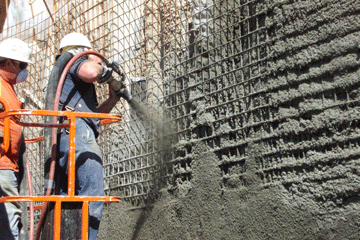
Shotcrete

Introduction and History
• The shotcrete process has grown into an important and widely used construction technique.
• In 1910, a double chambered cement gun was introduced to the construction industry.
• The sand-cement product of this device was given the proprietary name Gunite.
• In the ensuing years, trade marks such as Guncrete, pneucrete, Blastcrete, Blocrete, Jetcrete, and the terms pneumatically applied mortar and concrete, were introduced to describe similar processes.
• The early 1930s saw the generic term “shotcrete” introduced by the American Railway Engineering Association to describe the Gunite process.
• In 1951, the American Concrete Institute (ACI) adopted the term shotcrete to describe the dry-mix process.
• Shotcrete is now applied to the wet-mix process and has gained universal acceptance in the United States.
shotcrete
Definition Of Terms /References
• Gunite / Mortar: Maximum aggregate size = sand
• Shotcrete : Maximum aggregate size = 3/8” typical (1/2” max)
• AKA: Sprayed Concrete (Europe)
• Relevant ACI Publications
     • 506R-90 Guide to Shotcrete
     • 506.3R-91 Guide to Certification of Shotcrete Nozzlemen
     • 506.4R-94 Guide for the Evaluation of Shotcrete
     • 506.2-95 Specification for Materials, Proportioning and Application of Shotcrete
     • 506.1R-98 State of the Art Report on Fiber Reinforced Shotcrete
Component Materials
• Aggregate
      • Fine = 60 - 70% of combined weight of aggregates
      • Coarse = 30-40% of combined weight of aggregate
• Portland Cement
      • Types I, II = 6.5 - 9.0 sack (611 - 846 lb/yd3)
• Water (potable)
      • Target W/C = 0.33 - 0.45
• WRA
      • Objective = workability with reduction of W/C ratio
• Microsilica
      • Typical range = 5% - 15% by weight of cement
• Latex Modifier
      • More commonly used in thin layer repair work than in ground support
• Accelerator
      • Silicates
      • Aluminates
      • Dosage = 2 - 5% by weight of cementitious material
Strength Developement of Shotcrete
Shotcrete Applications
• Sealing of Ground Mass Interface
    • Prevent erosion and/or air slaking (crumbling)
    • Deter exfiltration/infiltration
• Component of Excavation Support System
    • Sole Support
    • Rockbolt / shotcrete system
    • Rockbolt / shotcrete / lattice girder system
• Final Lining
     • Practical, functional or esthetic considerations do not require formed concrete
• Repair Work
shotcrete1

FHPCM

    HPCM or High Performance Concrete Meter is an instrument which measures highly flowable concrete mixtures.
    The Flow of High Performance Concrete Meter (FHPCM) is based on the design of the Tattersall two-point device (MKII) and was developed specifically for measuring highly flowable concrete mixtures (Yen et al. 1999; Tang et al. 2001).

High Performance Concrete Meter

    The FHPCM features a coaxial cylinders geometry. The outer cylinder is 226.1 mm in diameter and 170.75 mm in height. The inner spindle is 149.9 mm in diameter, 150.75 mm in height and is set 20 mm above the bottom of the outer cylinder. The inner spindle rotates while the outer cylinder remains fixed. Ribs attached to the outer cylinder prevent slip. The rotation speed of the inner spindle is reduced from an initial maximum value in a stepwise fashion. The torque required to turn the spindle is considered the sum of the torque in the annulus (area between the outer and inner cylinders) and the torque in the space under the bottom of the spindle. The torque in the annulus and in the space below the spindle can be described with equations for coaxial cylinders rheometers and parallel plate rheometers, respectively. From these equations
the yield stress and plastic viscosity can be calculated in fundamental units. The device is calibrated using a fluid of known flow properties. Yen et al. (1999) used malt sugar with known properties, as measured with an established traditional coaxial cylinder viscometer.
       The geometry of the FHPCM is problematic. The ratio of the outer cylinder radius to the inner cylinder radius is 1.51. The maximum aggregate size that can be tested, based on the maximum aggregate size being 1/5 the distance between the outer and inner cylinders, is 7.6 mm. In research (Yen et al. 1999) conducted using the FHPCM, the maximum size of aggregate used was 12.7 mm.The rheometer, which is considered appropriate only for highly flowable concretes, has been used successfully for concretes with slumps of 140 mm to 280 mm.
Advantages:
• The device measures yield stress and plastic viscosity for highly flowable concretes.
• The operation of the device is automated.
Disadvantages:
• The device was developed for research and has not been verified with extensive laboratory testing.
• The device is only appropriate for highly flowable concretes.
• Based on general principles of coaxial cylinders rheometers, the geometry of the FHPCM is problematic.
• The device is too large for field use.

Thermal Cracking of Concrete

Thermal Cracking: 
          The reason of Thermal cracking is excessive temperature differences within a concrete structure or its surrounding environment.Due to the temperature difference the cooler portion contracts more than the warmer portion, which restrains the contraction. If the restraint results in tensile stresses that exceed the in-place concrete tensile strength then Thermal cracks appears. Cracking due to temperature can occur in concrete members that are not considered mass concrete.
 
Thermal Crack
 
Reason:
      Hydration of cementitious materials generates heat for several days after placement in all concrete members. This heatdissipates quickly in thin sections and causes no problems. In thicker sections, the internal temperature rises and dropsslowly, while the surface cools rapidly to ambient temperature.Surface contraction due to cooling is restrained by the hotter interior concrete that doesn’t contract as rapidly as the surface. This restraint creates tensile stresses that can crack the surface concrete as a result of this uncontrolled temperature difference across the cross section. In most cases thermal cracking occurs at early ages. In rarer instances thermal cracking can occur when concrete surfaces are exposed to extreme temperature rapidly. Concrete members will expand and contract when exposed to hot and cold ambient temperatures, respectively. Cracking will occur if this bulk volume change resulting from temperature variations is restrained. This is sometimes called temperature cracking and is a later age and longer term issue.
 
Mass concrete :
      The main factor that defines a mass concrete member is its minimum dimension. ACI 301 suggests that a concrete member with a minimum dimension of 4 feet (1.3 m) should be considered as mass concrete. Some specifications use a volume- to-surface ratio. Other factors where precautions for mass concrete should be taken even for thinner sections are with higher heat generating concrete mixtures – higher cementitious materials content or faster hydrating mixtures.   The main concern with mass concrete is a high thermal surface gradient and resulting restraint as discussed above. These conditions can result during the initial stages due to heat of hydration and during the later stages due to ambient temperature changes. Another factor is a temperature differential between a mass concrete member and adjoining elements. As the mass member cools from its peak temperature, the contraction is restrained by the element it is attached to, resulting in cracking. Examples are thick walls or dams restrained by the foundation.
 
Other Structures:
       Temperature cracking can occur in structures that are not mass structures. The upper surface of pavements and slabs are exposed to wide ranges of temperature while the bottom surface is relatively protected. A significant temperature differential between the surface and the protected surface canresult in cracking. Concrete has a thermal coefficient of expansion in the range of 3 to 8 millionths/°F (5.5 to 14.5 millionths/°C). A concrete pavement cast at 95ºF (35ºC) during the summer in Arizona may reach a maximum temperature of 160ºF (70ºC) and a minimum temperature in winter of 20ºF (-7ºC), resulting in an annual temperature cycle of 140ºF (75ºC). Expansion joints and spacing between joints have to be designed to withstand such temperature induced expansion and contraction to prevent cracking.
 
HOW to Recognize Thermal Cracking?
        Thermal cracks caused by excessive temperature differentials in mass concrete appear as random pattern cracking on the surface of the member. Checkerboard or patchwork cracking due to thermal effects will usually appear within a few days after stripping the formwork. Temperature-related cracks in pavements and slabs look very similar to drying shrinkage cracks.They usually occur perpendicular to the longest axis of the concrete. They may become apparent any time after the concrete is placed,but usually occur within the first year of summer-winter cycle.
 
HOW to Minimize thermal cracking?
       The key to reducing thermal or temperature-related cracking is to recognize when it might occur and to take steps to minimize it. A thermal control plan that is tailored to the specific requirements of the project specification is recommended. Typical specifications for mass concrete include a maximum temperature and a maximum temperature differential. The maximum temperature addresses the time it takes for the concrete member to reach a stable temperature and will govern the period needed for protective measures. Excessively high internal concrete temperatures also have durability implications. A temperature differential limit attempts to minimize excessive cracking due to differential volume change. A limit of 35ºF (20ºC) is often used. However, concrete can crack at lower or higher temperature differentials. Temperature differential is measured using electronic sensors embedded in the interior and surface of the concrete. The peak temperature of a concrete mixture can be estimated assuming perfectly insulated conditions. See Ref. 1 and 2. Thermal modeling can also be used to predict temperature and potential for cracking based on thermal controls planned. Two models are HIPERPAV for pavements and Concrete Works for pavements and other mass concrete members. Consultants can also assist with these analyses. A large part of the responsibility to minimize thermal cracking lies with the designer and contractor. Steps include establishing the concrete mixture, specification limits for temperature of concrete as delivered and in the structure, insulating the structure and termination of protective measures, and in critical conditions, post-cooling of structural members. Some steps to minimize thermal cracking are:
 
• Concrete mixture - Reduce heat of hydration by optimizing the cementitious materials using supplementary cementitious materials like fly ash or slag; or using a portland cement that generates a lower heat of hydration. Avoid specifying an excessively low w/cm. Retarding chemical admixtures may delay but not reduce peak concrete temperatures. A cooler initial concrete temperature will reduce the peak temperature in the structure but needs to be balanced with practical feasibility and project costs.
 
• Mass concrete - Ensure that thermal control measures are agreed upon in a pre-construction meeting. Some things to consider include placement method and details, establishing temperature requirements for concrete as delivered and temperature monitoring of in-place concrete, curing methods and duration that do not increase temperature differentials, use of insulation - including when and how the insulation will be removed, and use of cooling pipes if necessary. Placing concrete in lifts along with timing of successive lifts can minimize the overall peak temperature and time of thermal control but this needs to be balanced against construction joint preparation and the design requirements. Water curing will cool concrete surfaces and water retention curing methods may be more appropriate. Wood forms provide insulation while metal forms do not. Covering forms with insulating blankets may be necessary. The removal of insulation or formwork should be scheduled based on monitored in-place temperature and thermal shock to the surface should be avoided. Reinforcing steel protruding from a massive beam can act as a heat sink to draw heat out of the interior of the beam. When needed, cooling pipes, typically plastic, can be embedded in the concrete about 3 feet (1m) apart to
reduce peak internal temperatures.
 
Pavements and slabs – Reduce heat gain from solar radiation by misting slabs and pavements or providing shade for the work. Placing concrete in the early morning may result in a more critical situation if the peak temperature from  hydration coincides with peak ambient temperature.Wind breaks may increase heat gain if they inhibit evaporative cooling of the concrete. Curing blankets can reduce heat loss from slabs and pavements during cold weather conditions. The key to reducing thermal cracking is good communication between the designer, contractor, and concrete producer.
 
Repair :
      Repairs to concrete structures must be undertaken with the advice and consent of the designer. Inappropriate repair techniques can result in greater damage later. Pavements and slabs can be repaired using acceptable and compatible repair materials or by cutting out the cracked areas and replacing them with infill strips. Repair of mass concrete members will depend on the crack width and the service conditions of the structure. Fine hairline cracks are aesthetically unpleasing and may not require any repair. However, these cracks may prove to be a future durability problem depending on the service conditions. Wider cracks may need to be sealed by epoxy injection followed by a seal coating. Recommendations for crack repair are provided in ACI 224.1R and by the International Concrete Repair Institute .

Cracks in Concrete Basement Walls

Types of Crack in Concrete Basement Walls: 
        Sometimes Undesirable cracks occur in Cast-in-place concrete basements walls.The Reasons are:
 
a. Temperature and drying shrinkage cracks. With few exceptions, newly placed concrete has the largest volume that it will ever have. Shrinkage tendency is increased by excessive drying and/or a significant drop in temperature that can lead to random cracking if steps are not taken to control the location of the cracks by providing control joints. When the footing and wall are placed at different times, the shrinkage rates differ and the footing restrains the shrinkage in the wall causing cracking. Lack of adequate curing practices can also result in cracking.
 
b. Settlement cracks. These occur from non-uniform support of footings or occasionally from expansive soils.

c. Other structural cracks. In basements these cracks generally occur during backfilling, particularly when heavy equipment gets too close to the walls.
 
d. Cracks due to lack of joints or improper jointing practices.

 
crack2

 
Reason of Basement Cracks:
     In concrete basement walls some cracking is normal. Most builders or third party providers offer limited warranties for basements. A typical warranty will require repair only when cracks leak or exceed the following:
 
cracks
 
      The National Association of Homebuilders requires repair or corrective action when cracks in concrete basements walls allow exterior water to leak into the basement.If the following practices are followed the cracking is minimized:
 
crack1

a. Uniform soil support is provided.
b. Concrete is placed at a moderate slump - up to about 5 inches (125 mm) and excessive water is not added at the jobsite prior to placement.
c. Proper construction practices are followed.
d. Control joints are provided every 20 to 30 feet (6 to 9 m).
e. Backfilling is done carefully and, if possible, waiting until the first floor is in place in cold weather. Concrete gains strength at a slower rate in cold weather.
f. Proper curing practices are followed.


Way to Construct Quality Basement:
   Since the performance of concrete basements is affected by climate conditions, unusual loads, materials quality and workmanship, care should always be exercised in their design and construction. The following steps should be followed:

a. Site conditions and excavation. Soil investigation should be thorough enough to insure design and construction of foundations suited to the building site. The excavation should be to the level of the bottom of the footing. The soil or granular fill beneath the entire area of the basement should be well compacted by rolling, vibrating or tamping. Footings must bear on undisturbed soil.
 
b. Formwork and reinforcement. All formwork must be constructed and braced so that it can withstand the pressure of the plastic concrete. Reinforcement is effective in controlling shrinkage cracks and is especially beneficial where uneven side pressures against the walls may be expected. Observe state  and local codes and guidelines for wall thickness and reinforcement.
 
c. Joints. Shrinkage and temperature cracking of basement walls can be controlled by means of properly located and formed joints. As a rule of thumb,
in 8-ft. (2.5-m) high and 8-inch (200-mm) thick walls, vertical control joints should be provided at a spacing of about 30 times the wall thickness. These wall joints can be formed by nailing a 3/4-inch (20-mm) thick strip of wood, metal, plastic or rubber, beveled from 3/4 to 1/2 inch (20 to 12-mm) in width, to the inside of both interior and exterior wall forms. The depth of the grooves should be at least 1/4 the wall thickness. After the removal, the grooves should be caulked with a good quality joint filler. For large volume pours or with abrupt changes in wall thickness, bonded construction joints should be planned before
construction. The construction joints may be horizontal or vertical. Wall reinforcement continues through a construction joint.
 
d. Concrete. In general, use concrete with a moderate slump up to 5 inches (125-mm). Avoid retempering with water prior to placing concrete. Concrete with a higher slump may be used providing the mixture is specifically designed to produce the required strength without excessive bleeding  or segregation. Water reducing admixtures can be used for this purpose. In areas where the weather is severe and walls may be exposed to moisture and  freezing temperatures air entrained concrete should be used.
 
e. Placement and curing. Place concrete in a continuous  operation to avoid cold joints. If concrete tends to bleed and segregate a lower slump should be used and the concrete placed in the form every 20 or 30 feet around the perimeter of the wall. Higher slump concretes that do not bleed or segregate will flow horizontally for long distances and reduce the number of required points of access to the form. Curing should start immediately after finishing. Forms should be left in place five to seven days or as long as possible. If forms are removed after one day some premature drying can result at the surface of the  concrete wall and may cause cracking. In general, the application of a liquid membrane-forming curing compound or insulated blankets immediately after  removal of forms will help prevent drying and will provide better surface durability. During cold weather, forms may be insulated or temporarily covered with insulating materials to conserve heat from hydration and avoid the use of an external source of heat. During hot dry weather, forms should be covered. Wet burlap, liquid membrane- forming curing compound sprayed at the required
coverage or draping applied as soon as possible after the forms are removed. 

 
f. Waterproofing and drainage. Spray or paint the exterior of walls with damp proofing materials or use waterproof membranes. Provide foundation  drainage by installing drain tiles or plastic pipes around the exterior of the footing, then cover with clean granular fill to a height of at least 1 foot prior  to backfilling. Water should be drained to lower elevations suitable to receive storm water run off.
 
g. Backfilling and final grading. Backfilling should be done carefully to avoid damaging the walls. Brace the walls or, if possible, have first floor in place before backfill. To drain the surface water away from the basement finish grade should fall off 1/2 to 1 inch per foot (40 to 80-mm per meter) for at least 8 to 10 feet (2.5 to 3 m) away from the foundation.
 
h. Crack repair. In general, epoxy injection, dry packing, or routing and sealing techniques can be used to repair stabilized cracks. Before repairing leaking cracks, the drainage around the structure should be checked and corrected if necessary.

BTRHEOM Rheometer

   Developed in France, the BTRHEOM rheometer (de Lerrard et al. 1997; de Lerrard 1999; Wong et al. 2000; Ferraris and Brower 2001; Bartos, Sonebi, and Tamimi 2002) is a parallel plate rheometer that measures the yield stress and plastic viscosity of concrete.
   The device consists of a 240 mm diameter, 100 mm tall cylindrical container with blades mounted at the top and bottom of the container. The bottom blade is fixed while the top blade rotates and measures torque. The motor is housed below the container and is connected to the top blade through a 40 mm diameter inner shaft in the concrete container. The device includes a vibrator to consolidate the concrete and to measure the effect of vibration on the rheological parameters. The test is conducted by turning the top blade at different speeds and recording the resulting torque. The torque is recorded after a 20 second period in order to allow the shear rate to stabilize.
     Computer software developed for the BTRHEOM rheometer automatically calculates the Bingham parameters of yield stress and plastic viscosity. Further, the data generated in the software can be used to calculate the flow curve in terms of the Herschel-Bulkley parameters. The device records torque, Γ , and rotation speed, N, which are related according to Equation[1], where A and b are empirical constants.

Γ = Γ0 + ANb                                                         [1]

       Equation [1] is similar to the flow equation for a Herschel-Bulkley fluid, as expressed in Equation [1] where τ = shear stress, τ0 = yield stress, γ = shear velocity gradient, and a and b  are empirical constants

                                           τ =τ0 +aγb                                                             [2]

   The relationship between shear stress and the shear velocity gradient can be further simplified in terms of the Bingham parameters of yield stress and plastic viscosity, μ :

                                           τ =τ0 + μγ                                                             [3]

     The BTRHEOM rheometer is capable of measuring dilatancy during a test. In addition to calculating the yield stress, τ0 , as shown above, the yield stress at rest can be determined using a stress controlled test. The determination of yield stress at rest is appropriate for highly  thixotropic concrete mixes.  Since the initial development of the BTRHEOM rheometer, the accuracy of the device has been  validated experimentally and analytically (Hu et al. 1996).  A simplified version of the BTRHEOM rheometer has been developed to eliminate several  drawbacks of the original device (Szecsy 1997). In the simplified version, the motor is located  above the bowl. As a result, fewer parts are necessary. Instead of using two felt seals that must be replaced frequently, the simplified version only requires a single rubber o-ring.

Advantages:
• The device measures yield stress, plastic viscosity, yield stress at rest, and dilatancy.
• The parallel plate geometry of the BTRHEOM rheometer eliminates some of the drawbacks of coaxial cylinders geometry.
•  The results of the test have been verified with finite element models.
• The operation of the device is computer controlled, requiring little user intervention.
• A built-in vibrator allows the measurement of rheological properties under vibration.
Disadvantages:
• The device is complex and expensive.
• The seals must be replaced frequently. The device must be recalibrated to account for the friction caused by new seals.
• Although the device is designed to be compact and sufficiently rugged for field use, the device is too expensive for everyday field use.
• The device does not measure low workability concretes (generally with slumps less than 4 inches).

Surface Settlement Test

    The surface settlement test (Bartos, Sonebi, and Tamimi 2002) is used to assess the stability of concrete by measuring the settlement of fresh concrete over time. The test is most appropriate for highly fluid and self-compacting concretes; however, it can be used for moderate slump concrete mixtures.
     The test apparatus consists of an 800 mm tall, 200 mm diameter pipe sealed at the bottom. Two longitudinal seams allow the pipe to be removed once the concrete sample has hardened. To perform the test, concrete is filled to a height of 700 mm in the cylinder. Highly fluid and self compacting concretes do not need to be consolidated; however, rodding or vibration is necessary for less fluid concretes. A 4 mm thick, 150 mm diameter acrylic plate is placed on the top surface of the concrete. Four 75 mm long screws extend downward from the acrylic plate and into the concrete. A linear dial gauge or linear variable differential transformer (LVDT) is used to measure the settlement of the acrylic plate over time until the concrete hardens. The top of the pipe is covered during the test to prevent evaporation. In addition to a plot of surface settlement versus time, the maximum surface settlement versus initial concrete height is computed.

Advantages:
• The test is inexpensive and simple to perform.
• The test is appropriate for a wide range of concrete mixtures.
Disadvantages:
• The test does not give a direct result.
• The time required to perform the test is substantially longer than other test methods because the settlement distance must be recorded until the concrete hardens.

Ring Penetration Test

     The ring penetration test consists of a steel ring that is allowed to sink under its own weight into a sample of fresh concrete. To perform the test, mass can be gradually added to the ring until the ring begins to settle into the concrete. The total mass on the ring when the ring begins to penetrate the concrete is related to yield stress. The rate at which the ring settles when a constant mass is present on the ring can also be measured. The method is considered appropriate for grouts and high-workability concretes.

penetration test
Advantages:
• The ring penetration test is simple and inexpensive to perform.
• The test can be performed on in-place concrete.
Disadvantages:
• The test is only considered appropriate for grouts and highly workable concretes.
• The test is a static test that must be performed on a level concrete surface.
• Large coarse aggregate particles could interfere with the descent of the ring and distort
test results.
• The test is not widely used and the interpretation of the test results is not well known.

Kelly Ball Test

    The Kelly ball test (Powers 1968; Bartos 1992; Scanlon 1994; Ferraris 1999; Bartos, Sonebi, and Tamimi 2002) was developed in the 1950s in the United States as a fast alternative to the slump test. The simple and inexpensive test can be quickly performed on in-place concrete and the results can be correlated to slump.
    The test apparatus consists of a 6 inch diameter, 30 pound ball attached to a stem, as shown in Figure 6. The stem, which is graduated in ¼ inch increments, slides through a frame that rests on the fresh concrete. To perform the test, the concrete to be tested is stuck off level. The ball is released and the depth of penetration is measured to the nearest ¼ inch. At least three measurements must be made for each sample.

kelly ball Test

    The Kelly ball test provides an indication of yield stress, as the test essentially measures whether the stress applied by the weight of the ball is greater than the yield stress of the concrete (Ferraris 1999). For a given concrete mixture, the results of the Kelly ball test can be correlated to slump.
Equations based on empirical testing have been published for use on specific types of concrete mixtures (Powers 1968). Typically, the value of slump is 1.10 to 2.00 times the Kelly ball test reading. It has been claimed that the Kelly ball test is more accurate in determining consistency than the slump test (Scanlon 1994).
     The Kelly ball test was formerly standardized in ASTM C360-92: “Standard Test Method for Ball Penetration in Freshly Mixed Hydraulic Cement Concrete.” The ASTM standard was discontinued in 1999 due to lack of use. The test has never been used widely outside the United States (Bartos 1992).
    The test is applicable to a similar range of concrete consistencies as the slump test and is applicable to special mixes, such as lightweight and heavyweight concretes. The precision of the test declines with the increasing size of coarse aggregate (Bartos 1992).
Advantages:
• The test is faster than the slump test and can be preformed on in-place concrete to obtain
a direct result quickly.
• It has been claimed that the Kelly ball test provides more accurate results than the slump
test.
Disadvantages:
• Like the slump test, the Kelly ball test is a static test.
• The test must be performed on a level concrete surface.
• The test is no longer widely used.
• Large aggregate can influence the results.

Dusting Concrete Surfaces

WHAT is Dusting?

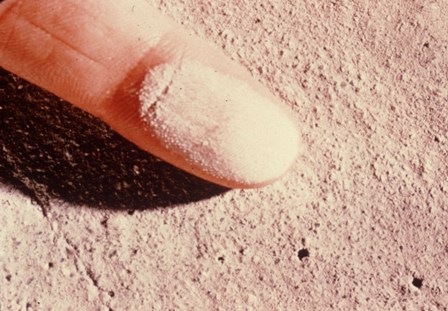
   Formation of loose powder resulting from disintegration of surface of hardened concrete is called dusting or chalking. The characteristics of such surfaces are:
a. They powder under any kind of traffic
b. They can be easily scratched with a nail or even by sweeping.

WHY Do Concrete Floors Dust?

   A concrete floor dusts under traffic because the wearing surface is weak. This weakness can be caused by:
a. Any finishing operation performed while bleed water is on the surface or before the concrete has finished bleeding. Working this bleed water back into
the top 1/4 inch [6 mm] of the slab produces a very high water-cement ratio and, therefore, a low strength surface layer.
b. Placement over a non-absorptive subgrade or polyethylene vapor retarder. This reduces normal absorption by the subgrade, increases bleeding and, as a
result, the risk of surface dusting.
c. Floating and/or troweling operations following the condensation of moisture from warm humid air on cold concrete. In cold weather concrete sets slowly, in particular, cold concrete in basement floors. If the humidity is relatively high, water will condense on the freshly placed concrete, which, if troweled into the surface, will cause dusting.
d. Inadequate ventilation in enclosed spaces. Carbon dioxide from open salamanders, gasoline engines or generators, power buggies or mixer engines may cause a chemical reaction known as carbonation, which greatly reduces the strength and hardness of the concrete surface.
e. Insufficient curing. This omission often results in a soft surface skin, which will easily dust under foot traffic.
f. Inadequate protection of freshly placed concrete from rain, snow or drying winds. Allowing the concrete surface to freeze will weaken the surface and result in dusting.

Dusting1

HOW to Prevent Dusting?

a. Concrete with the lowest water content with an adequate slump for placing and finishing will result in a strong, durable, and wear-resistant surface. In
general, use concrete with a moderate slump not exceeding 5 inches [125 mm]. Concrete with a higher slump may be used provided the mixture is designed to produce the required strength without excessive bleeding and/or segregation. Water-reducing admixtures are typically used to increase slump while maintaining a low water content in the mixture. This is particularly important in cold weather when delayed set results in prolonged bleeding.
b. NEVER sprinkle or trowel dry cement into the surface of plastic concrete to absorb bleed water. Remove bleed water by dragging a garden hose across the surface. Excessive bleeding of concrete can be reduced by using air-entrained concrete, by modifying mix proportions, or by accelerating the setting time.
c. DO NOT perform any finishing operations with water present on the surface or while the concrete continues to bleed. Initial screeding must be promptly
followed by bull floating. Delaying bull floating operations can cause bleed water to be worked into surface layer. Do not use a jitterbug, as it tends to
bring excess mortar to the surface. DO NOT add water to the surface to facilitate finishing operations.
d. Do not place concrete directly on polyethylene vapor retarders or non-absorptive subgrades as this can contribute to problems such as dusting, scaling, and cracking. Place 3 to 4 inches [75 to 100 mm] of a trimable, compactible fill, such as a crusherrun material, over vapor retarders or non-absorptive subgrade prior to concrete placement. When high evaporation rates exist, lightly dampen absorptive subgrades just prior to concrete placement, ensuring that water does not pond or collect on the subgrade surface.
e. Provide proper curing by using liquid membrane curing compound or by covering the surface with water, wet burlap, or other curing materials as soon as possible after finishing to retain moisture in the slab. It is important to protect concrete from the environment at early ages.
f. Placing concrete in cold weather requires concrete temperatures exceeding 50°F [10°C] as well as an accelerating admixture.

HOW to Repair Dusting?

a. Sandblast, shot blast or use a high-pressure washer to remove the weak surface layer.
b. To minimize or eliminate dusting, apply a commercially available chemical floor hardener, such as sodium silicate (water glass) or metallic zinc or magnesium fluosilicate, in compliance with manufacturer’s directions on thoroughly dried
concrete. If dusting persists, use a coating, such as latex formulations, epoxy sealers, or cement paint.
c. In severe cases, a serviceable floor can be obtained by wet-grinding the surface to durable substrate concrete. This may be followed by properly bonded placement of a topping course. If this is not practical, installation of a floor covering, such as carpeting or vinyl tile covering, is the least expensive solution to severe dusting. This option will require some prior preparation since adhesives for floor covering materials will not bond to floors with a dusting problem and dusting can permeate through carpeting.

DD-Crack-Chasing